
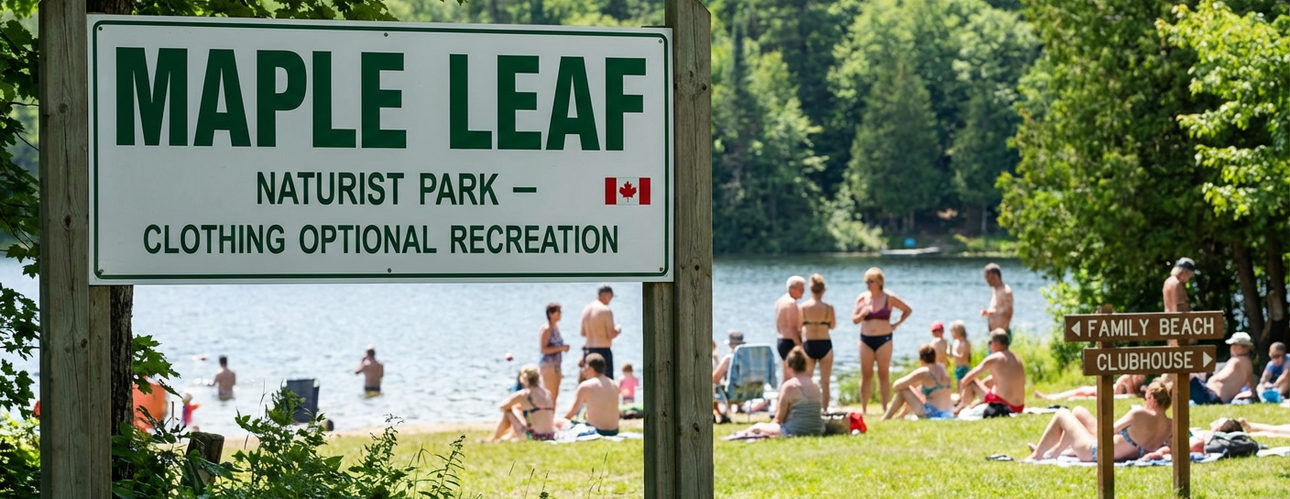
Naturism in Canada refers to social nudity practiced in designated spaces such as Canadian nudist camps, naturist clubs, nudist parks, resorts, and clothing-optional beaches. It is legal in certain contexts, widely tolerated, and supported by organized communities across most provinces. Understanding where and how these places operate helps clarify what is permitted, expected, and socially accepted in Canada today.
What Naturism Means in Canada
In Canada, the terms naturist and nudist are often used interchangeably, though there’s a subtle preference. Naturist organizations like the Federation of Canadian Naturists (FCN) tend to use “naturist” because it emphasizes a philosophy rooted in respect for oneself, others, and the environment. “Nudist” is more neutral, focused simply on the absence of clothing.
Both terms describe the same basic practice: social nudity in appropriate contexts. That context matters. Being nude at a designated naturist club is naturism. Being nude in your backyard might be private nudity.
Canadian naturism is almost always social, meaning it happens in groups, in designated spaces, and within understood boundaries. It’s not exhibitionism. It’s not tied to sexuality. And it’s not something people do to shock or provoke. It’s recreational, communal, and for most participants, remarkably ordinary.
Where Naturists Gather in Canada
Naturism in Canada does not happen at random. It tends to form around specific places where nudity is understood, expected, and regulated. These spaces range from long-established clubs and parks to public beaches and seasonal resorts.
Naturist Clubs & Associations
Region | Organization | Type | Location | Key Details | Website |
Ontario | Bare Oaks Family Naturist Park | Landed naturist park/campground | East Gwillimbury, ON (near Toronto) | Year-round operation, family-oriented, clothing-prohibited (not optional), camping, cabins, indoor pool, sauna, regular social events | bareoaks.ca |
British Columbia | Van Tan Club | Landed naturist club | North Vancouver, BC | Founded in 1939, oldest continuous naturist club in Canada, small and rustic, member-run, seasonal outdoor use | vantanclub.org |
Alberta | Calgary Nude Recreation | Non-landed naturist association | Calgary, AB (events across city facilities) | Organizes swims, gym nights, and social events; active in advocacy for clothing-optional public recreation; membership-based | calgarynuderecreation.com |
Quebec | Fédération québécoise de naturisme (FQN) | Provincial naturist federation | Quebec (province-wide) | Coordinates clubs and events across Quebec, supports indoor activities during winter, represents naturist interests provincially | fqn.qc.ca |
A naturist club is an organized group, usually affiliated with national or international federations like the FCN, the Fédération québécoise de naturisme (FQN), or the American Association for Nude Recreation (AANR). Clubs are either landed (they own property) or non-landed (they organize events at rented or rotating locations).
Landed clubs often resemble small campgrounds. Members and visitors can swim, play volleyball, use saunas, or just relax. Non-landed clubs organize indoor swims, social events, or outdoor gatherings at private venues.
Membership usually involves an application process, a probationary period, and annual fees. Most clubs expect members to contribute volunteer hours to maintain facilities.
Nude & Clothing-Optional Beaches
Canada has two officially designated clothing-optional beaches:
Beach | Location | Status |
|---|---|---|
Wreck Beach | Vancouver, BC | Official (recognized 1991) |
Hanlan’s Point | Toronto Island, ON | Official (designated 1999) |
Both beaches are well-used, especially during summer weekends. Wreck Beach, accessible via steep trails from the University of British Columbia campus, has been a clothing-optional space since the 1920s.
Beyond these two, dozens of “unofficial” beaches exist across the country. The most popular ones include:
- Crystal Crescent Beach (Nova Scotia)
- Oka Park (Quebec)
- Cottontail Corner (Alberta)
- Patricia Beach (Manitoba)
Unofficial nude beaches sit in a legal grey area. Nudity is not formally allowed, but rules are rarely enforced unless there are complaints about harassment, sexual behaviour, or disturbances. Many of these beaches are in provincial parks or on public land, often reached by walking trails.
Basic nude beach etiquette is simple. Give others space, avoid staring, never take photos without consent, and keep behaviour clearly non-sexual.
Nudist Parks & Public Spaces
In some provincial and national parks, discreet nudity is quietly tolerated in remote or low-traffic areas. People swim or sunbathe nude in secluded spots, and park staff usually do not intervene unless complaints are made.
That tolerance can change. In 2012, the National Capital Commission and local police announced enforcement at Meech Lake and Carbide-Willson Mill in Gatineau Park, ending years of informal naturist use after increased visibility.
Park | Province | Setting | Status |
Gatineau Park (Meech Lake, Carbide-Willson Mill) | Quebec | National Capital Commission park | Formerly tolerated, now enforced |
Oka National Park | Quebec | Provincial park beaches | Informal tolerance in certain areas |
Crystal Crescent Beach | Nova Scotia | Provincial park | Long-standing unofficial use |
Patricia Beach | Manitoba | Public lakeshore | Informal, community-tolerated |
Cottontail Corner | Alberta | Riverbank/natural area | Unofficial, low-visibility use |
Resorts & Campgrounds
Nudist resorts in Canada range from rustic campgrounds to full-service facilities. Most are family-friendly, though a few cater specifically to adults.
Province | Facility | Type | Location | Facilities & Use |
Ontario | Ponderosa Nature Resort | Naturist resort/campground | Near Hamilton, ON | Seasonal camping, cabins, pool, sauna, social events, organized activities |
British Columbia | Coady’s Cabana | Small naturist resort | Okanagan Valley, BC | Cabins and RV sites, quiet setting, limited capacity, seasonal operation |
Alberta | Sunny Chinooks Camping Association | Member-run naturist campground | South of Calgary, AB | Camping sites, clubhouse, volunteer-managed facilities, seasonal use |
Seasonal life at these nudist camps follows a predictable rhythm. Summer weekends are busy, with families, volleyball tournaments, and social events. Weekdays are quieter. Winter months see reduced activity, though some clubs host indoor swims and sauna nights to keep members connected.
Social Naturism in Everyday Life
Mixed ages are common. Families bring children, couples attend together, and solo visitors (both men and women) participate. Behaviour, not nudity, sets the tone. Staring, photography without consent, or sexual behaviour are grounds for being asked to leave. Most clubs have clear policies, and members enforce them.
“Once you’ve been here a few times, you forget people are naked. You’re just talking, playing cards, or swimming. It’s not a thing.”
— BC naturist club member
Public Attitudes Toward Naturism in Canada
How do Canadians generally view naturism? The data suggests tolerance exceeds participation.
A 2024 survey conducted by Ipsos for the FCN polled 1,601 Canadians about their experiences and attitudes toward nudity and naturism. Key findings:
2024 Survey Highlights
- 66% of Canadians have engaged in at least one naturist-related behaviour
- 55% have slept nude
- 15% have swum nude in mixed company
- 6% have visited a nude beach
- 2% have visited a naturist club or resort
- 82% believe others should have the legal right to nude recreation in designated spaces
More telling: 82% of Canadians believe others should have the legal right to swim or sunbathe nude in designated settings like naturist resorts (66% support) and official nude beaches (70% support). Only 18% oppose nudity in any public context.
Support is strongest among older Canadians (55+) and declines among younger adults (18-34). This contradicts the assumption that younger generations are more open-minded. The data shows the opposite.
Public discussions on platforms like Quora and Reddit reflect similar patterns. Users in threads about naturism often express cautious curiosity. A common theme:
“I wouldn’t do it myself, but I don’t see why it should be illegal if people are respectful.”
Urban areas tend to be more tolerant than rural regions, though exceptions exist. Beaches near Vancouver and Toronto see regular use by both naturists and textiles without significant conflict. Smaller towns, however, sometimes react negatively to naturist events, especially if they involve public facilities like community pools.
Naturism in Canada: History in Brief
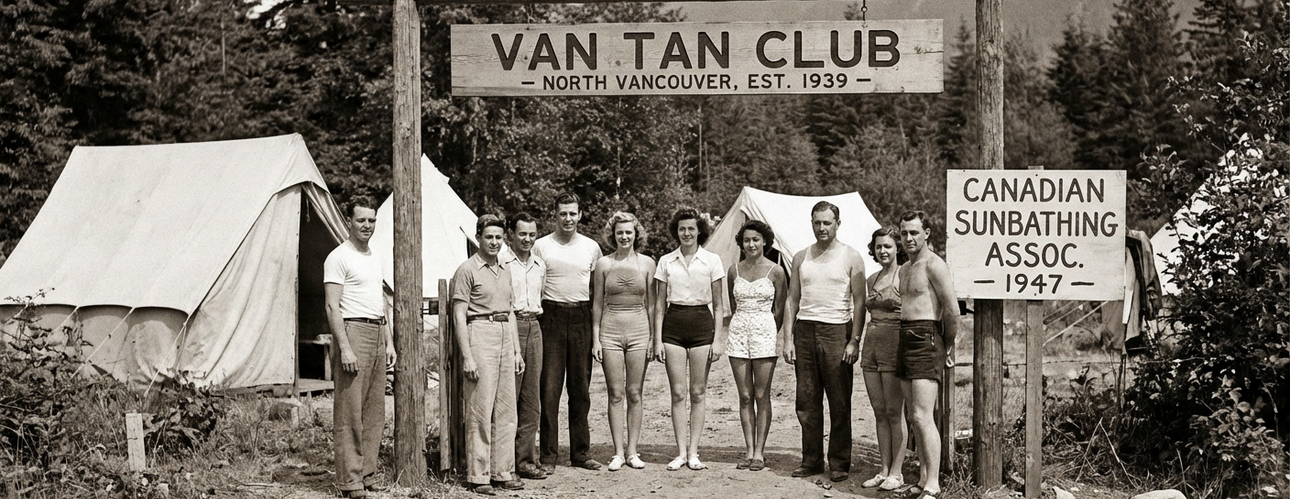
Organized naturism in Canada began in the 1930s. The Van Tan Club was founded in 1939 by Ray Connett, often called “the father of Canadian nudism.” It remains active today in North Vancouver.
By the 1940s and 1950s, several clubs had formed across the country, though they operated quietly to avoid public backlash. The Canadian Sunbathing Association was established in 1947, later splitting into regional groups before reorganizing under the Federation of Canadian Naturists in 1986.
Key milestones include:
- 1971: Legal precedent for nude sunbathing (R. v. Beaupré, BC Supreme Court)
- 1977: Legal precedent for skinny dipping (R. v. Benolkin, Saskatchewan)
- 1991: Wreck Beach receives formal recognition as Canada’s first legal clothing-optional beach
- 1999: Toronto designates Hanlan’s Point as Ontario’s first sanctioned nude beach
Naturism by the Numbers
The 2024 Ipsos survey provides the clearest snapshot of naturism in Canada. Comparing 2014 and 2024 data reveals shifts:
Behaviour | 2014 | 2024 |
|---|---|---|
Sleeping nude | 62% | 55% |
Swimming nude (mixed) | 19% | 15% |
Open to nude beach | 12% | 10% |
Participation in organized naturism (clubs and resorts) remains low but stable at around 2%. The decline in casual behaviours like skinny dipping may reflect broader cultural shifts toward body-consciousness and digital surveillance anxiety, though researchers haven’t confirmed this.
Gender differences are consistent: men report higher participation across all behaviours. Older Canadians (55+) are more likely to have visited nude beaches or swum nude than younger adults.
Is Naturism Legal in Canada? Laws, Rules & Grey Areas
Canadian law does not explicitly prohibit nudity. Criminal Code Section 174 addresses “nudity” but defines it narrowly:
“A person is nude who is so clad as to offend against public decency or order.”
— Criminal Code of Canada, Section 174
This means nudity itself isn’t illegal. What matters is whether it offends public decency, which depends on context. Nudity at a designated naturist club is unlikely to offend. Nudity in a downtown plaza likely would.
In practice, enforcement is inconsistent. Some municipalities tolerate unofficial nude beaches for decades. Others crack down. Provincial and national parks may allow discreet nudity in remote areas but prohibit it in campgrounds or popular trails.
Common Naturism Terms Explained
- Naturism: A lifestyle emphasizing respect for self, others, and environment, practiced through social nudity.
- Nudism: A simpler term, focused on recreational nudity.
- Clothing-optional: Spaces where nudity is permitted but not required.
- Social nudity: Nudity practiced in group settings.
- Landed club: A naturist club that owns property.
- Non-landed club: A club organizing events at rented locations.
- Free beach: A beach where nudity is tolerated or legal.
- Textile: A term for clothed people or clothing-required spaces.
Who Naturism Is (and Isn’t) For
Naturism is for people who:
- Want to try social nudity in a safe, non-sexual environment
- Appreciate body diversity and non-judgmental spaces
- Enjoy outdoor recreation without swimsuits
- Value community-based activities over commercial resorts
Naturism is not for people who:
- Conflate nudity with sexuality
- Want to observe or photograph others without consent
- Expect adult entertainment
- Are looking for dating opportunities
What to Know Before Visiting a Naturist Space
Etiquette basics
- Bring a towel to sit on (hygiene standard)
- Don’t stare or comment on others’ bodies
- Ask before taking photos
- Respect personal space and boundaries
- Keep conversations and behaviour non-sexual
When clothing is still appropriate
- During cold weather
- For sun protection beyond sunscreen
- While playing contact sports
- In dining areas at some clubs
- When you’re uncomfortable
Understanding Naturism Without the Myths
Naturism in Canada is simply one form of recreation. It isn’t a belief system or a challenge to social norms. It’s a personal preference, practiced in shared spaces where nudity is accepted. Over time, this has shaped a quiet nudist culture built around clear boundaries, mutual respect, and ordinary social interaction.
What matters most are the places and the behaviour. Some people value body acceptance, others just enjoy being unclothed outdoors. We see both coexist naturally.
When naturist spaces are understood as non-sexual and community-focused, opposition tends to soften. In 2026, naturism in Canada remains quiet, organized, and mostly out of sight. For some, it’s occasional, for others, it’s part of daily life, and for many, it’s simply something they know exists, and that’s enough.
A quick note about this site
We want to be clear about who we are and what we do here. This website is independently run, and the content you see today reflects our own research, writing, and editorial choices. While this domain may have been used in the past for related topics, we are not connected to previous operators, clubs, or organizations. Everything published here follows our current focus on factual, non-promotional, and community-oriented information.